
Regular Backpack Dimensions: A Practical Guide for Everyday Use

I often find that choosing the right backpack comes down to understanding its dimensions and how they fit into daily life. A regular backpack may seem like a simple item, but its size, shape, and capacity directly affect comfort, organization, and practicality. By looking closely at regular backpack dimensions, I can better judge whether a backpack will truly meet my everyday needs—whether for work, school, commuting, or short trips.
Part 1. What are the standard dimensions of a regular backpack?
A regular backpack typically measures “18–20 inches (H) × 12–14 inches (W) × 6–8 inches (D)“. This size balances storage capacity and portability, making it suitable for daily use such as school, work, commuting, or short trips. While exact dimensions vary by brand, most regular backpacks fall within this range to remain comfortable and practical.
Part 2. What size backpack is considered “regular”?
A “regular” backpack usually refers to a bag with a capacity of 20–30 liters. It is larger than a compact daypack but smaller than travel or hiking backpacks. This size fits daily essentials like books, a laptop, clothing layers, and small accessories without being bulky.
Part 3. Are regular backpack dimensions suitable for daily use?
Yes. Regular backpack dimensions are designed specifically for everyday activities. They are large enough to carry work or school items while remaining lightweight and easy to carry. Their proportions also help distribute weight evenly, reducing shoulder and back strain during extended use.
Part 4. How big is a regular backpack in liters?
Most regular backpacks hold 20–30 liters. A 20L backpack suits minimal daily carry, while a 25–30L backpack can handle heavier loads such as textbooks, gym clothes, or a packed workday. This range is the most popular size category worldwide.
Part 5. Can a regular backpack fit a laptop?
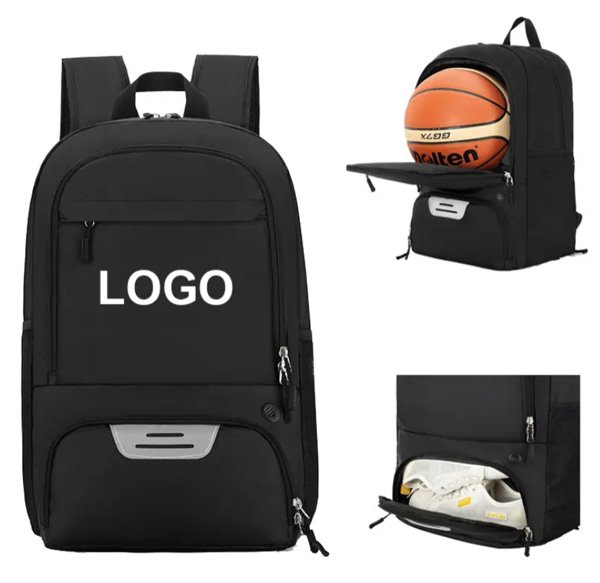
Yes. Most regular backpacks are designed to fit laptops ranging from 13 to 15.6 inches, and some models can accommodate 17-inch laptops. They usually include padded compartments to protect electronics while maintaining overall manageable dimensions.
Part 6. Is a regular backpack allowed as a carry-on?
In most cases, yes. Regular backpacks typically meet airline carry-on size limits and often qualify as either a carry-on or personal item. However, exact allowance depends on airline policies and whether the backpack is overpacked beyond its normal dimensions.
Part 7. What is the difference between a regular backpack and a large backpack?
A regular backpack focuses on daily functionality and comfort, while a large backpack is designed for travel or hiking. Large backpacks usually exceed 35 liters and are taller and deeper, making them less suitable for everyday commuting.
Part 8. How much weight can a regular backpack carry?
A regular backpack can comfortably carry “5–10 kg (11–22 lbs)“depending on its design and materials. Ergonomic straps, padded back panels, and load distribution play a bigger role than size alone in determining safe carrying weight.
Part 9. Are regular backpack dimensions the same for men and women?
The dimensions are often similar, but backpacks designed for women may have shorter torso lengths, narrower shoulder straps, and contoured shapes. These differences improve comfort rather than significantly changing overall size.
Part 10. What items can fit in a regular backpack?
A regular backpack can typically hold a laptop, books, notebooks, charger, water bottle, lunch box, light jacket, and small accessories. Its dimensions are optimized for daily essentials without unnecessary extra space.
Part 11. Is a regular backpack good for school?
Yes. Regular backpacks are ideal for school use, offering enough space for textbooks, notebooks, and a laptop while remaining easy to carry throughout the day.
Part 12. Is a regular backpack suitable for travel?
It works well for short trips or as a daypack, but for long travel or multi-day trips, a larger backpack is usually more practical.
Part 13. How tall is a regular backpack?
Most regular backpacks are 18–20 inches tall, which fits the average adult torso and standard storage needs.
Part 14. What backpack size is best for everyday carry?
A backpack in the 20–25 liter range is considered ideal for everyday carry, balancing capacity, comfort, and portability.
Part 15. Does backpack depth matter?
Yes. Depth affects comfort and mobility. A depth of 6–8 inches keeps the load close to your back, improving balance and reducing strain.

 English
  Japanese